Fall Fleet Check: Is Your Equipment Ready for the Holiday Rush?
Why a fall fleet check matters
The busiest stretch of the year is almost here. From mid-November through December, warehouses, distribution centres, and retail backrooms across Canada move more product, run longer shifts, and lean harder on every lift truck in the building. That is exactly when a breakdown hurts the most.
A forklift that sputters through a quiet September can fail outright under holiday volume. Parts take longer to arrive, technicians are booked solid, and every hour of downtime ripples into missed shipments. The good news: most peak-season failures can be predicted. A structured forklift fleet inspection in October gives you time to fix, replace, or add equipment before the rush, not during it.
Here is a four-step fall fleet check to help your operation head into the holidays with confidence.
Step 1: Inspect every unit in your fleet
Start with a full walk-around of every forklift, not just the ones that have been giving you trouble. Daily pre-shift checks catch obvious issues, but a seasonal inspection digs deeper into the systems that wear quietly over time.
Use this forklift maintenance checklist as a starting point:
|
System |
What to check |
Red flags |
|
Tires |
Tread depth, chunking, flat spots |
Worn past the safety line, uneven wear |
|
Forks and carriage |
Cracks, bends, heel wear, chain tension |
Heel worn more than 10%, stretched chains |
|
Hydraulics |
Hoses, cylinders, fluid levels |
Leaks, slow lift, mast drift |
|
Brakes and steering |
Stopping distance, steering response |
Pulling, soft pedal, play in the wheel |
|
Battery or engine |
Charge cycles, cables, coolant, filters |
Short run times, corrosion, overheating |
|
Safety devices |
Horn, lights, alarms, seatbelt, overhead guard |
Anything missing or not working |
Be sure your inspection process aligns with CSA B335, the Canadian safety standard for lift trucks, as well as your provincial occupational health and safety (OHS) requirements. Document every finding. Those records will drive your repair and replacement decisions in the next steps.
Step 2: Spot equipment nearing end-of-life
Some forklifts just need a tune-up. Others are telling you their working life is winding down. Watch for these warning signs:
- Rising repair costs. If annual maintenance spending on a unit is approaching a large share of its replacement value, keeping it running may cost more than replacing it.
- Repeat breakdowns. The same component failing two or three times in a year often points to deeper wear.
- High hours. Many internal combustion forklifts are reviewed for replacement somewhere around 10,000 to 12,000 operating hours, depending on application and care.
- Hard-to-find parts. Older models can mean long lead times, which is risky heading into December.
- Declining performance. Slower lift speeds, shorter run times, and operator complaints are early indicators.
Flag any unit showing two or more of these signs. Those are your top candidates for replacement planning.
Step 3: Plan replacements before peak season
Once you know which units are at risk, decide whether to repair, replace, or add capacity. Waiting until a forklift fails in December leaves you scrambling for rentals at peak demand pricing. Planning in October gives you options.
When evaluating forklift replacement, consider:
- Total cost of ownership. Look beyond purchase price to fuel or energy, maintenance, and expected downtime.
- Changing workloads. Has your operation grown? Are you running more shifts or handling heavier loads than when the fleet was purchased?
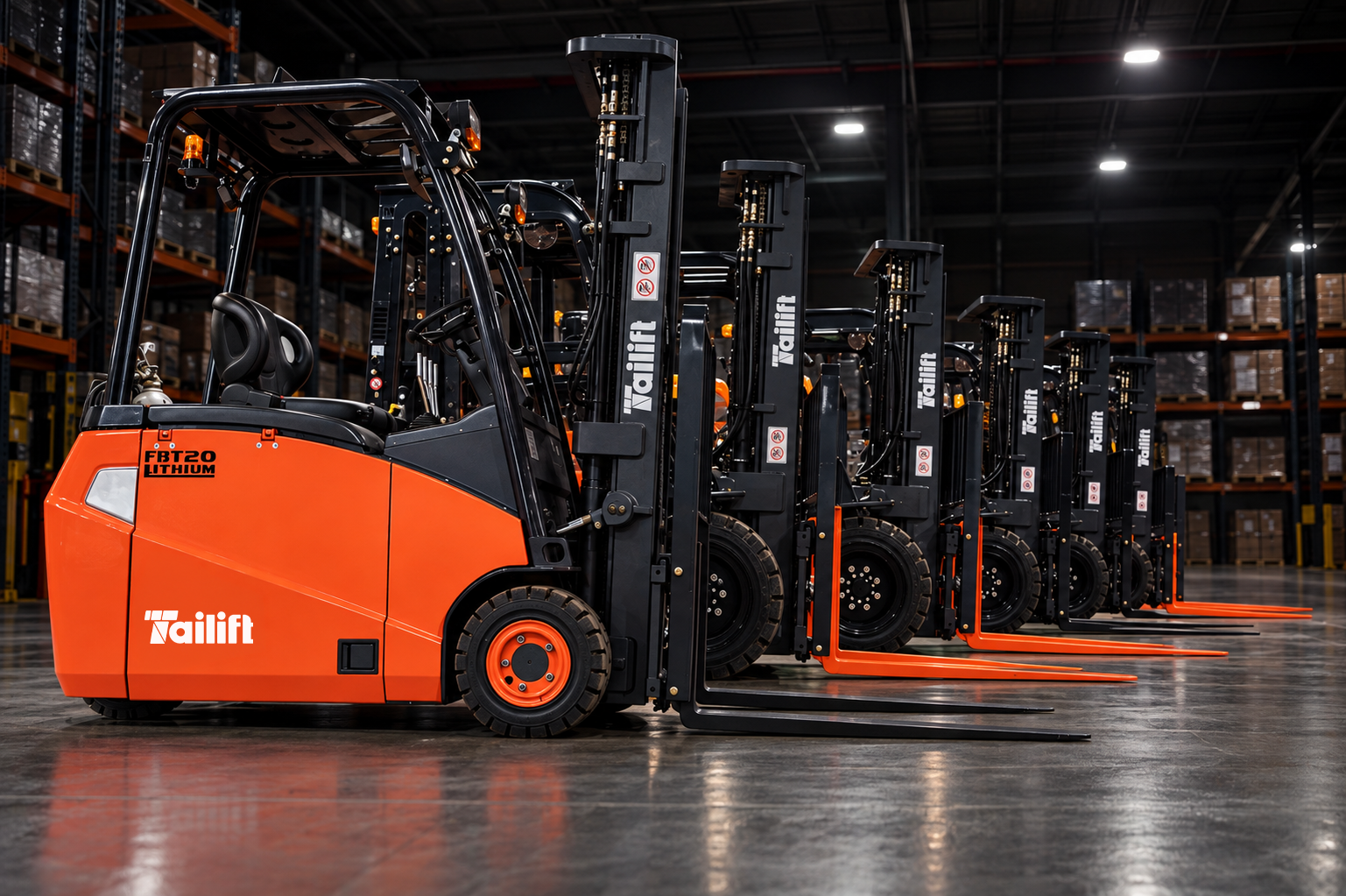
- Power source. Many operations are moving to lithium forklifts for faster opportunity charging, consistent power through the shift, and reduced battery maintenance. Models like the Tailift Z2000 4-wheel and 3-wheel lithium forklifts are well suited to multi-shift indoor operations
- Lead time. New equipment takes time to arrive and set up. Ordering now improves your odds of having it on the floor before volumes peak.
For outdoor yards or heavier-duty applications, the Tailift 9L Plus II PFG Series offers dependable LPG and gas power built for demanding Canadian conditions.
Step 4: Prepare for Canadian winter conditions
The holiday rush arrives alongside colder weather, and both put extra strain on equipment. Before temperatures drop, check that batteries are holding a full charge, since cold reduces capacity. Inspect cab heaters, wipers, and lights for units that move between indoor and outdoor areas. Confirm tires are suited to slick or uneven surfaces, and review dock procedures for snow, ice, and condensation.
This is also a good time to refresh operator training. Seasonal staff and longer shifts increase risk, so make sure everyone on the floor is properly trained and evaluated.
Get your fleet holiday-ready with Tailift
A fall fleet check is one of the simplest ways to protect your busiest season. Inspect every unit, identify equipment nearing end-of-life, and plan replacements while you still have time to act.
Tailift builds reliable material handling equipment backed by decades of engineering experience. Our Canadian dealer network can help with fleet assessments, preventive maintenance, and finding the right replacement forklift for your operation.
Ready to get started? Contact us, or your local Tailift dealer today to book a fleet inspection or explore our full lineup of lithium and internal combustion forklifts before the holiday rush hits.